4640 Monticello Ave, Suite 8A
Williamsburg, VA 23188
Get Directions

Myopia Control for Children in Williamsburg, VA
Help Protect Your Child’s Vision as Their Eyes Grow
Is your child’s glasses prescription becoming stronger each year? They may have progressive myopia, commonly known as nearsightedness.
At OptiView Family Eyecare PLLC, we offer personalized myopia-control care designed to do more than help children see clearly. Our goal is to slow the progression of myopia while your child’s eyes are still growing.
Our myopia-management options include:
Essilor® Stellest® myopia-control eyeglass lenses
MiSight® 1 day myopia-control contact lenses
Regular monitoring of vision, prescription changes, eye health, and eye growth
Treatment recommendations are customized according to your child’s age, prescription, eye health, lifestyle, maturity, and individual risk factors.
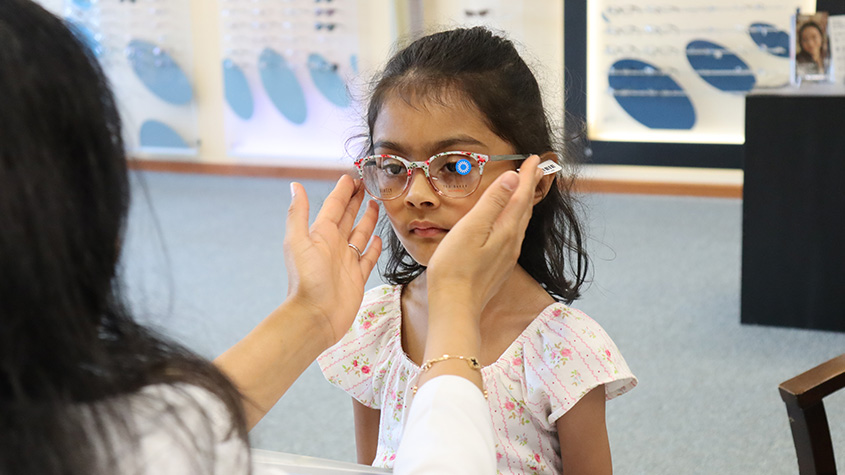
What Is Myopia?
Myopia is a condition that causes distant objects to appear blurry while nearby objects may remain clear. It commonly begins during childhood and can progress as the eyes continue to grow.
A child with myopia may:
Squint to see the board at school
Sit unusually close to the television
Hold books or devices close to the face
Complain of blurry distance vision
Experience headaches or eyestrain
Have frequent changes in their glasses prescription
Struggle to recognize people or objects from a distance
Myopia often develops when the eye grows longer than expected, causing incoming light to focus in front of the retina instead of directly on it.
Why Is Myopia Control Important?
Regular glasses and contact lenses can correct blurry vision, but standard single-vision lenses generally do not address the underlying progression of myopia.
As myopia becomes stronger, the eye may grow longer. Higher levels of myopia are associated with an increased lifetime risk of serious eye conditions, including:
Retinal detachment
Myopic macular degeneration
Glaucoma
Cataracts
Although no treatment can guarantee that myopia will stop progressing completely, beginning management early may help reduce how strong a child’s final prescription becomes.
Essilor® Stellest® Myopia-Control Lenses
OptiView Family Eyecare is proud to offer Essilor Stellest lenses, an innovative eyeglass-lens option created specifically for children with myopia.
Stellest lenses provide clear central vision while incorporating specially designed rings of highly aspherical lenslets. These lenslets create a myopia-control signal intended to help slow excessive eye growth while correcting the child’s distance prescription.
Benefits of Stellest Lenses
Worn like regular eyeglasses
Correct blurry distance vision
Designed to slow myopia progression
Do not require contact-lens insertion or removal
Can be an excellent option for younger children
Available in a frame selected with the help of our optical team
Supported by long-term clinical research
In a five-year follow-up study, children wearing highly aspherical lenslet spectacles experienced less prescription progression and less axial eye growth than an extrapolated single-vision control group. The researchers reported no significant treatment-related complications during the extended study.
Stellest lenses are the first spectacle lenses authorized by the FDA in the United States to correct myopia and slow its progression in eligible children. FDA authorization applies to children with healthy eyes who are 6 to 12 years old when treatment begins, with prescriptions that fall within the approved range.
Not every child will qualify under the FDA-authorized indication. A comprehensive evaluation is necessary to determine whether Stellest lenses are appropriate for your child.
MiSight® 1 Day Myopia-Control Contact Lenses
For children who are ready to wear contact lenses, we also offer MiSight 1 day.
MiSight 1 day is a daily disposable soft contact lens designed to provide clear vision while helping slow myopia progression in eligible children. The lenses are worn during the day and discarded after each use, eliminating the need to clean or store them overnight.
Benefits of MiSight 1 Day
Clear distance vision without glasses
Daily disposable convenience
No contact-lens cleaning solution required
Designed specifically for childhood myopia control
Helpful for sports and other active lifestyles
Individually fitted and monitored by our eye doctors
Successful contact-lens wear requires appropriate maturity, good hygiene, parental support, and consistent follow-up care. We provide personalized insertion, removal, and lens-care training before your child begins wearing contact lenses independently.
Which Myopia-Control Option Is Best?
There is no single option that is best for every child. During your child’s evaluation, we consider:
Their current prescription
How quickly the prescription has changed
Age at the onset of myopia
Family history of nearsightedness
Eye health
Lifestyle and daily activities
Ability and willingness to wear contact lenses
Previous glasses or contact-lens experience
Expected treatment consistency
Some children are best suited for Stellest eyeglass lenses, while others may prefer MiSight daily contact lenses. We will explain the available options and help your family make an informed decision.
What Does a Myopia-Control Evaluation Include?
Your child’s visit may include:
Review of their vision and prescription history
Comprehensive eye-health examination
Measurement of their current glasses prescription
Evaluation of focusing and binocular vision
Assessment of myopia-progression risk factors
Discussion of treatment choices
Baseline measurements for future comparison
A personalized monitoring and follow-up schedule
Follow-up visits are an essential part of treatment. We monitor your child’s vision, prescription, eye health, comfort, treatment consistency, and progression over time. Treatment may be adjusted as your child grows or their visual needs change.
Supporting Healthy Visual Habits
Myopia control works best as part of a complete plan. We may also discuss habits that support healthy visual development, such as:
Spending regular time outdoors
Taking breaks during prolonged reading or screen use
Maintaining an appropriate working distance
Using adequate lighting
Wearing the prescribed treatment consistently
Attending all recommended follow-up visits
These habits do not replace professional myopia treatment, but they can complement your child’s personalized care plan.
Frequently Asked Questions
Can regular glasses stop myopia from getting worse?
Standard single-vision glasses correct blurry vision, but they are not specifically designed to slow myopia progression. Myopia-control lenses provide vision correction while also incorporating technology intended to reduce progression.
At what age should myopia control begin?
Myopia management should be discussed as soon as myopia is diagnosed or progression is identified. Earlier onset can provide more years during which the prescription may increase. Eligibility for a particular treatment depends on the child’s age, prescription, eye health, and other clinical factors.
Will my child still need glasses as an adult?
Myopia-control treatment is intended to slow progression, not permanently eliminate nearsightedness. Your child may still need vision correction, but slowing progression may help reduce the strength of the prescription they eventually reach.
How long does treatment continue?
Treatment often continues while the child’s eyes are actively growing and their myopia is progressing. The duration varies, and our doctors will monitor your child to determine when treatment should be continued, modified, or discontinued.
How often will my child need follow-up visits?
The schedule depends on the selected treatment and your child’s individual needs. Myopia-control patients generally require more frequent monitoring than children wearing standard glasses alone.
Is myopia control covered by insurance?
Coverage varies by insurance plan. Some examinations, testing, specialized lenses, or follow-up services may not be covered. Our team will review applicable fees and available benefits with you.
hours
- Monday8:30am - 5:00pm
- Tuesday8:30am - 5:00pm
- Wednesday8:30am - 5:00pm
- Thursday9:30am - 6:00pm
- Friday8:30am - 4:00pm
- SaturdayClosed
- SundayClosed
© 2026 OptiView Family Eyecare PLLC. All rights Reserved. Accessibility Statement - Privacy Policy - Sitemap
Managed and Designed By
